
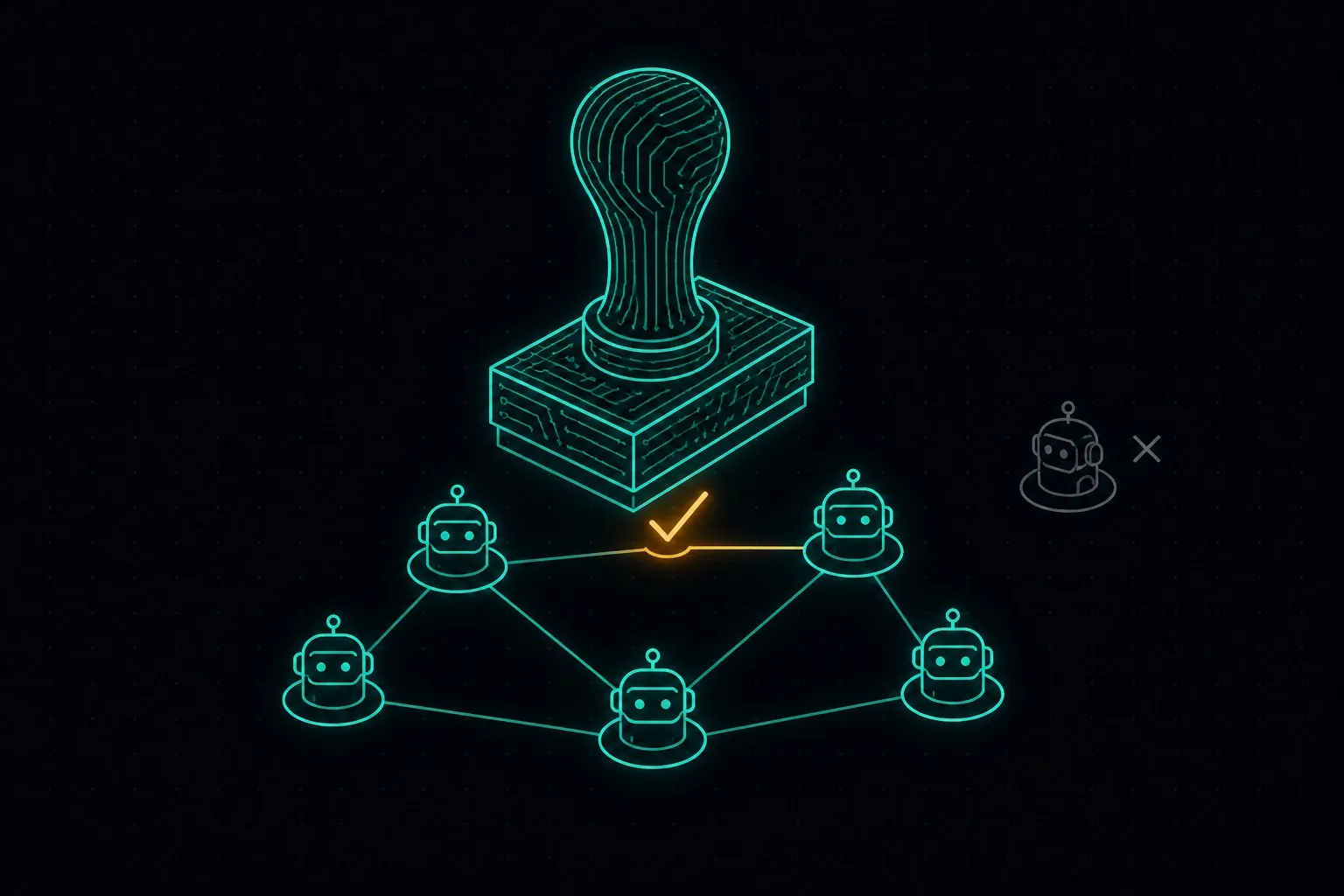
What Jeff Dean Actually Said
Dean isn't a blogger or a marketer — he's Google's former Chief Scientist. In an interview with Y Combinator's Diana Hu, he made a point that cuts against the industry's favorite pitch of the last two years: which AI model you use matters less and less. Progress used to be measured by model size and training data volume. Today it's measured by what's built around the model.
Three points from the interview (Search Engine Journal, by Roger Montti):
-
The model is one node in a system, not the whole system. Worrying about which foundation model to use distracts from what matters — the ecosystem of tools around it: search, APIs, knowledge bases.
-
Context beats training data. Training data, in Dean's words, is a "soup of trillions of tokens" dissolved across billions of parameters. Clean, task-specific context delivered at the moment of the task produces fewer hallucinations and sharper answers than a bigger model does.
-
The future belongs to multi-agent orchestration. A system needs to break a complex problem into subtasks, try different approaches, pick the best result, and keep a history of past decisions so it doesn't solve the same problem twice.
The conclusion lands hard on a market that's spent two years selling "our model is bigger." The winners won't be whoever has the newest model — they'll be whoever built the best infrastructure around one.
How Orakul Was Already Built — Before This Interview
Here's each of Dean's points, matched to what's already running in the product.
"The model is one node, not the whole system." In Orakul, the model is a setting on an individual agent, not the foundation of the platform. The account owner assigns a model to each specialist manually and can swap it in seconds without touching the rest of the system — Gemini for one agent, Claude for another, GPT for a third. The platform isn't locked to a single provider.
"Context beats training data." Orakul has a RAG-backed knowledge base — an agent answers from documents the owner actually loaded in, not from a "soup of trillions of tokens": price lists, procedures, the message history with a specific client. That's the clean, task-specific context Dean is describing.
"The future is multi-agent orchestration." For Orakul that isn't the future — it's day one. When a task comes in, the classifier inside the system doesn't try to answer it itself — it routes it to the right specialist on the team: sales, support, accounting. Separately, a scheduler tracks deadlines and sends reminders when a task stalls, so nothing gets lost. That's the applied version of the memory Dean is talking about: not one brilliant answer from one model, but a system that doesn't forget.
While the market spent two years arguing over which model would "win," Orakul never placed that bet in the first place. It bet on the team.
Why This Isn't a Coincidence
When we designed Orakul, the starting point wasn't "which model is smartest" — it was the plain question a small service-business owner actually asks: "I don't need a genius, I need a department that doesn't sleep and doesn't quit." A department, by definition, isn't one employee — it's several, each with a role, access to the right documents, and a memory of what happened yesterday. What Dean calls "context engineering" and "multi-agent orchestration" in 2026, a business owner just calls "a team that's actually organized."
Orakul didn't predict Dean's interview. It was built to his blueprint before he ever put a name on it in public.
How to Judge Any AI Tool By This Same Standard
Now that Google has set the frame, you can use it to evaluate any AI tool being pitched to you, not just Orakul:
-
Can you swap the model without rebuilding the system, or are you locked in? No choice means you're paying for one model, not an architecture.
-
Does it have its own knowledge base, or does it only answer from general training data? Without context, answers are vague and go stale fast.
-
Does it solve tasks alone, or route them across role-based specialists? One agent doing everything is a bottleneck, not a team.
-
Does it remember what happened yesterday, or does every conversation start from zero? Without memory of deadlines and task history, it re-solves the same problem over and over.
If most of your answers are "no," you're looking at a wrapper around one model, not a system.
What This Means For You
If you're evaluating an AI tool for your business and you're still comparing models on benchmarks, you're comparing the wrong thing. The question isn't "GPT-5 or Gemini 3" — it's whether there are tools, memory, and a team of agents around the model that actually see a task through. Orakul has answered that question from day one: it installs on your own server, works with any provider, and swaps models under the hood in seconds — because the architecture was never built around a single model to begin with.
Want to see it work on your own task? Message us on Telegram: t.me/trafficnavigator_bot.
Source: Roger Montti, "Google's Ex-AI Chief Jeff Dean Explains How To Improve Context Engineering" — Search Engine Journal, August 2026.

0 comments
No comments yet — be the first to share your thoughts.
Sign in to post your comment instantly:
…or comment as a guest — guest comments appear after moderation.