
TeachersPayTeachers is a marketplace where millions of teachers sell their own learning materials. It runs its own search — Algolia under the hood, with its own ranking rules — and no mainstream SEO suite looks inside it. Ahrefs and Semrush see Google; they do not see the TpT results page. Even TpT's native Search Analytics only looks backward: it reports what has already happened to your store. It cannot tell you what to build next.
From household scripts to a product
The first scripts were written at my wife's request, for her TpT store: check positions, look at competitors. Once it was clear that every seller needs these answers and nobody gets them by hand, the scripts grew into tptseo.tools — a working SaaS with accounts, a dashboard, and a daily data pipeline.

The tools, by the job they do
- Keyword Suggestions — find demand before you create. Ideas come from TpT's own live autocomplete and Google Ads data: what teachers actually type, not guesses. A single seed like "3rd grade math" fans out into the phrases buyers use.
- Keyword SERP Analysis — see what the top really takes. For any phrase the tool benchmarks the top-20 products: description length, ratings, downloads, pricing. One real example: 12,000 competing results, and the leaders average a 3,665-character description, a 4.9 rating and 28,298 downloads at $22.82. That is the bar — visible before you spend a month making the product.
- Product Analyser — a listing diagnosis in one paste. Drop in a link to any product, yours or a competitor's, and get its SEO signals laid out.
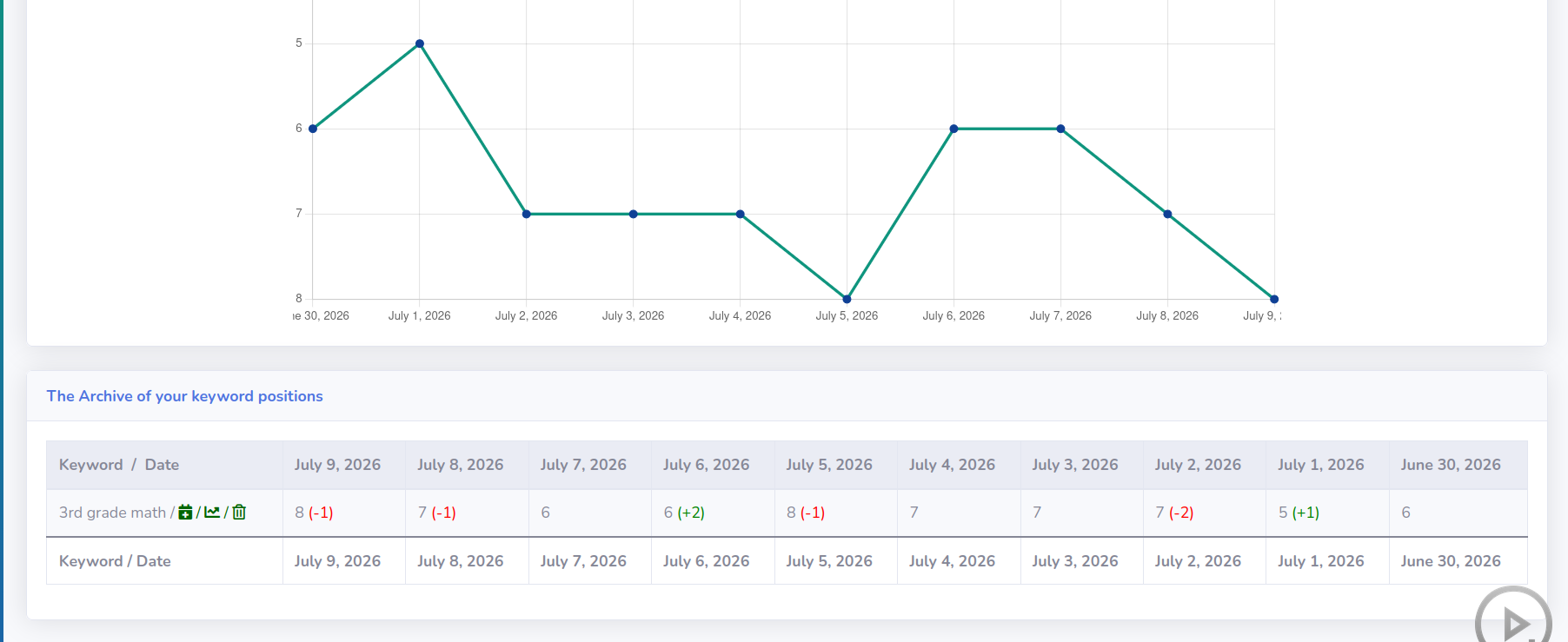
- Keyword Monitoring — positions without manual checking. Daily checks of every tracked keyword, with a Telegram alert when something moves. A seller learns about a drop the day it happens — not a month later from a sales report.
The result — and an honest one
The service runs unattended: scheduled checks on headless browsers cover every active user daily. I did try paid plans — the niche was not ready to pay for SEO, and I made the service completely free. It lives on voluntary donations, and sellers keep finding it, signing up and building their store SEO on its data. As a business experiment it failed; as a product, a data pipeline and a marketing lab it works every day.
The most honest proof of demand happened on its own: the service spent almost a year down with a 404 — and when it came back, sellers returned without a single email or banner. Today it gets three sign-ups a day, all organic.
The point of this case is not TpT. It is that a niche platform "without tools" is a solvable problem: the data can be collected, the metrics can be built, and the routine can be automated — by one person who does both the marketing and the code.

0 comments
No comments yet — be the first to share your thoughts.
Sign in to post your comment instantly:
…or comment as a guest — guest comments appear after moderation.