
A Search Engine Journal piece about John Mueller's comments on ranking recovery is circulating as a cautionary tale about Google and negative SEO. I read it closely, because I had a very similar-sounding case land on my own desk this year. The SEJ story turns out to be about something else entirely — but the thing it got mixed up with is real, it's cheap to pull off, and Google still doesn't have a fast answer for it.
What the SEJ story actually says
The article centers on a Reddit user who disavowed roughly 800 links and watched their rankings collapse within two weeks. Retold secondhand, that sounds exactly like a site getting hit by an attack and Google failing to protect it. It isn't. The user later admitted those 800 links were guest posts they had bought themselves on Fiverr — their own paid link-building, disavowed out of fear that it looked spammy in hindsight.
John Mueller's actual response undercuts the "Google can't stop this" reading rather than supporting it: disavowing a handful of links, he said, wouldn't cause a drop that sharp on its own — the more likely cause was a spam update landing around the same time. On timing, he was specific: disavow files typically take "maybe three, four, five, six months" to show their effect, not two weeks. So the SEJ story is really a warning against panic-disavowing your own links, not evidence that negative SEO goes unpunished.
The real problem it reminded me of
Here's what the SEJ story isn't about, and what I actually deal with: paying for a large batch of low-quality, spammy backlinks and pointing all of them at a competitor's site, not your own. It's a real, deniable, and currently one of the cheapest ways to try to knock a rival's rankings down without spending a dollar on your own SEO. It doesn't take a sophisticated operation — link marketplaces that sell bulk "toxic" backlinks exist precisely because this works often enough to be worth the price.
What happened to one of our clients
One of AviGroup's clients was hit by exactly this. We spotted the spike in their backlink profile, built a disavow list the same day, and submitted it to Google through Search Console. That's the fast part. The slow part is everything after: Search Console for that site still shows the aftermath, months later.
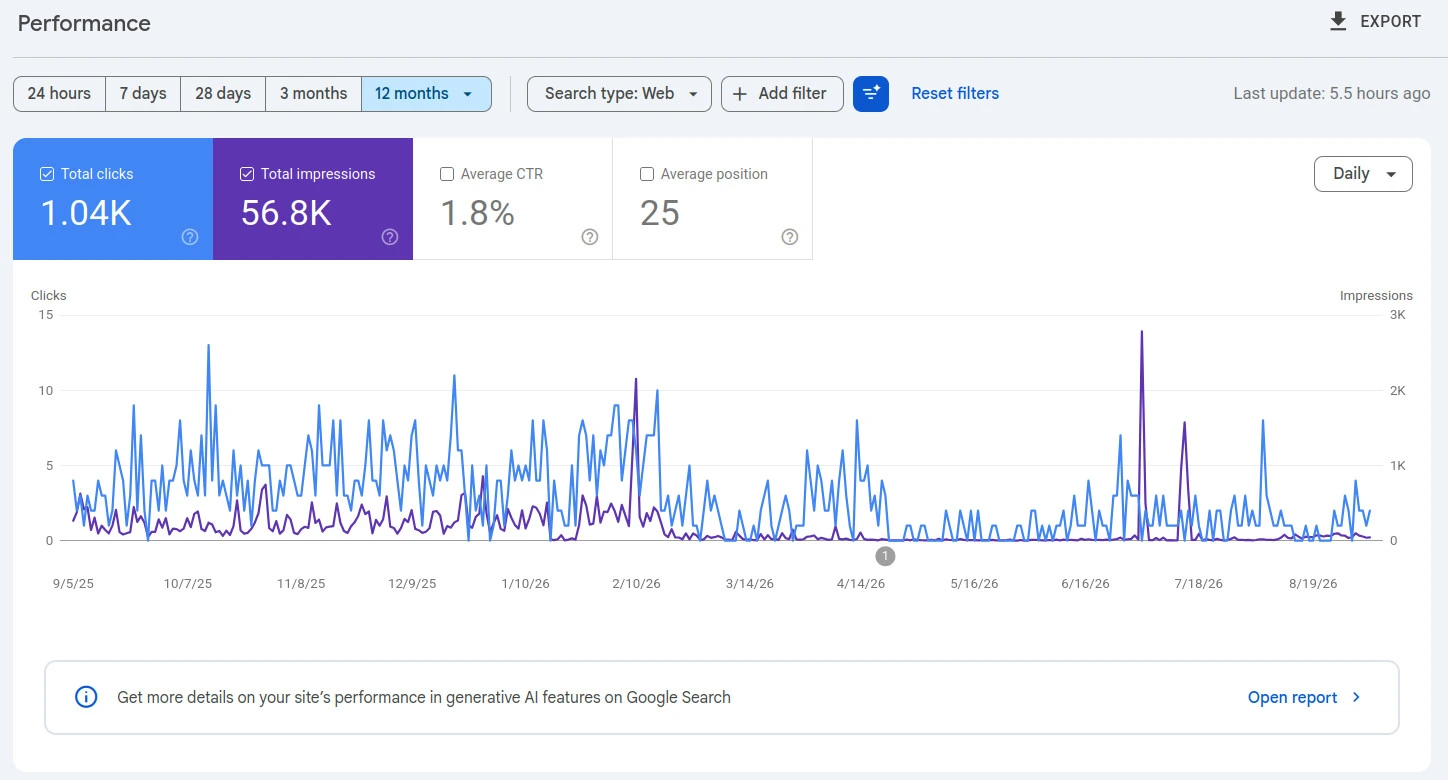
By our own tracking, the site's average position slipped by about two spots after the spike and still hasn't fully climbed back. That matches Mueller's timeline, not the two-week drama in the Reddit post: we disavowed immediately, and months later the graph is still working through it.
Why Google isn't fixing this faster
Disavow is a self-serve text file you upload and then wait on — there's no equivalent of a spam report that gets a human or a fast-acting system to intervene on your behalf when someone else buys links to sabotage you. I don't think that's a conspiracy; it's a prioritization call, and Google's engineering attention this year has visibly gone elsewhere. Gemini 3.7 shipped less than a month before the announcement of Gemini 3.8. I'm not claiming one team's headcount explains the other's backlog — I just haven't seen anything from Google this year that suggests defending targets of negative SEO got any faster.
What to actually do
- Watch your backlink profile on a schedule, not just when rankings already dropped — a spam-link spike is far easier to disavow on day one than after it's had weeks to compound.
- If you do find a coordinated spike, build the disavow file and submit it immediately, but set expectations with your client or your boss up front: three to six months, per Mueller, not days.
- Don't disavow your own guest posts or paid links just because they look risky in hindsight — that's what actually tanked the Reddit case, and it's easy to repeat if you read that story as "when in doubt, disavow more."
- Keep dated Search Console screenshots of anything that looks like an attack. It's the only evidence you'll have later, for a client, for your own records, or for Google if it ever asks.
- Treat disavow as damage control, not defense. The sites that shrug off a link-bombing attempt are the ones with enough real authority that a few thousand junk links can't move the needle much in the first place.
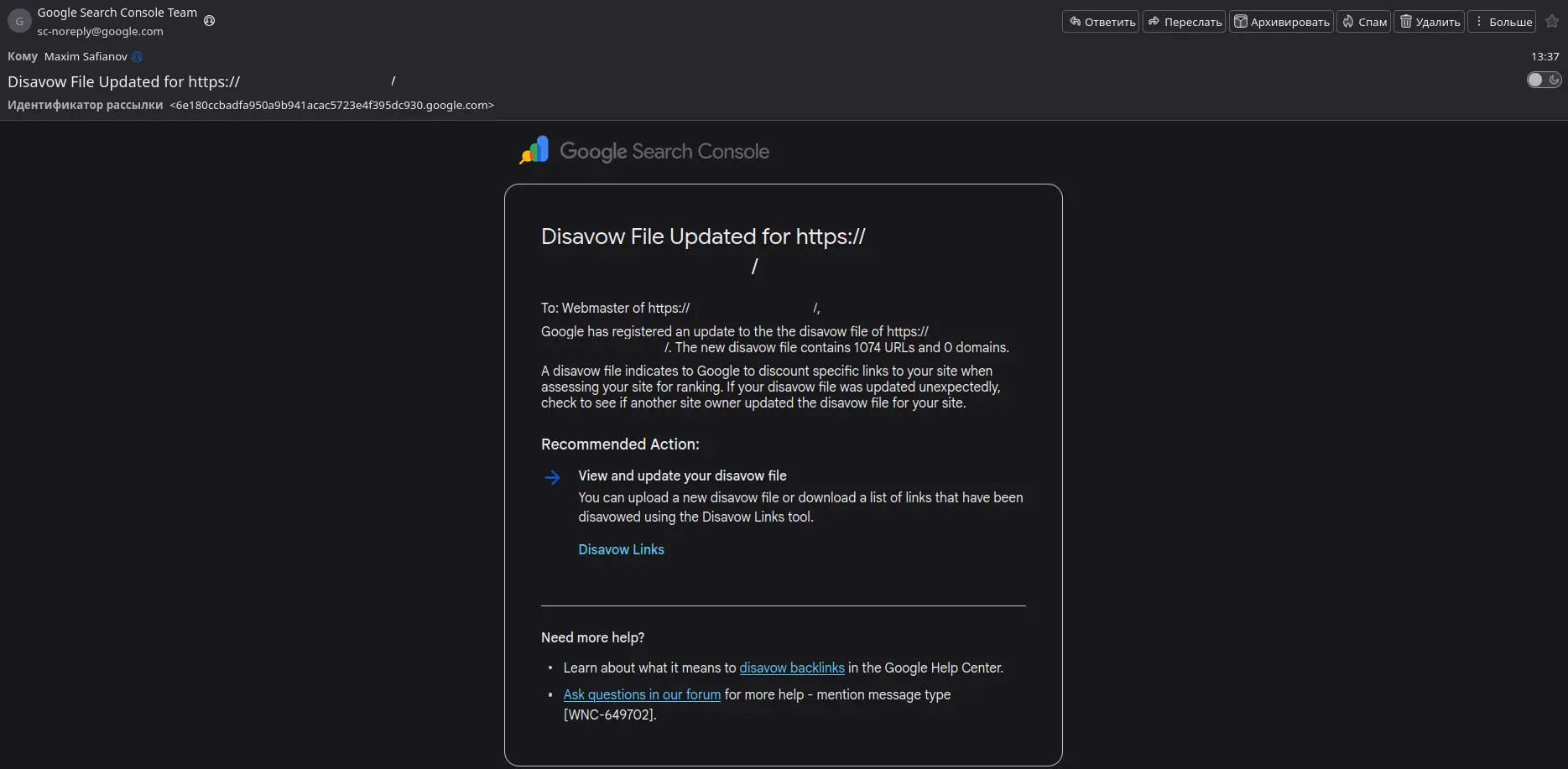
Update, September 7, 2026: As they say around here, "or do gor" (roughly: "the scream carries to the mountains" — local shorthand for something too on-the-nose to be believed) — you couldn't write this. Twelve hours after this article went up, an email landed from Google Search Console: "Disavow File Updated. The new disavow file contains 1074 URLs and 0 domains." Coincidence, obviously — Google isn't reading my blog. But the timing is too good not to mention. Google, are you watching me?

0 comments
No comments yet — be the first to share your thoughts.
Sign in to post your comment instantly:
…or comment as a guest — guest comments appear after moderation.