
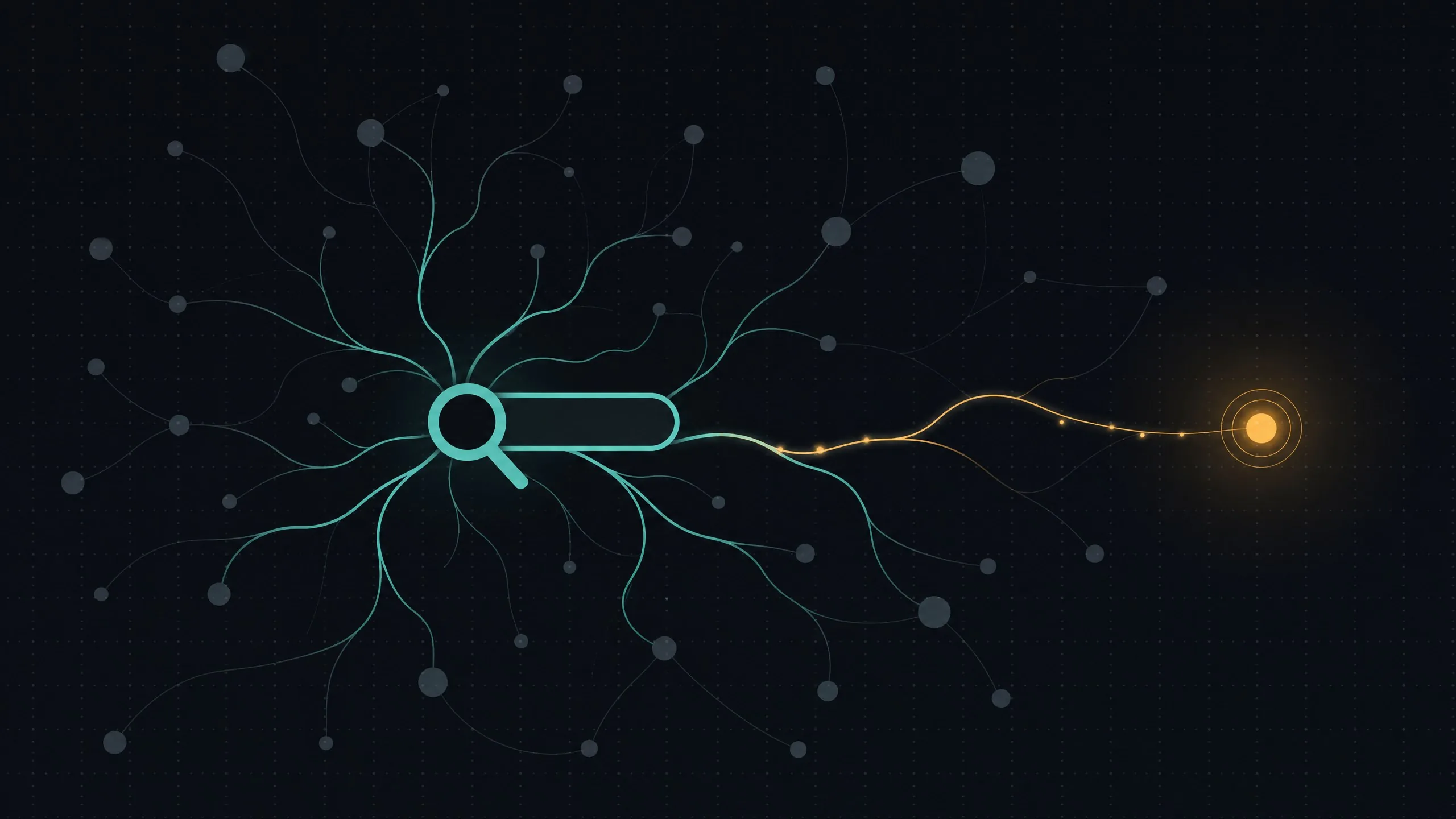
Google is preparing a shift after which a search session will stop ending on the results page. Instead of "ask — get an answer right now," search that keeps working in the background until it finds a satisfying answer, then delivers it later on its own. This shift already has a patent number, a filing date, and a named inventor — this isn't futurology or someone's conference slide, it's registered engineering.
If this blog has a slogan, it was written with exactly this kind of article in mind: "status: indexing the future of search." Here's what that looks like in practice.
A patent, not a forecast
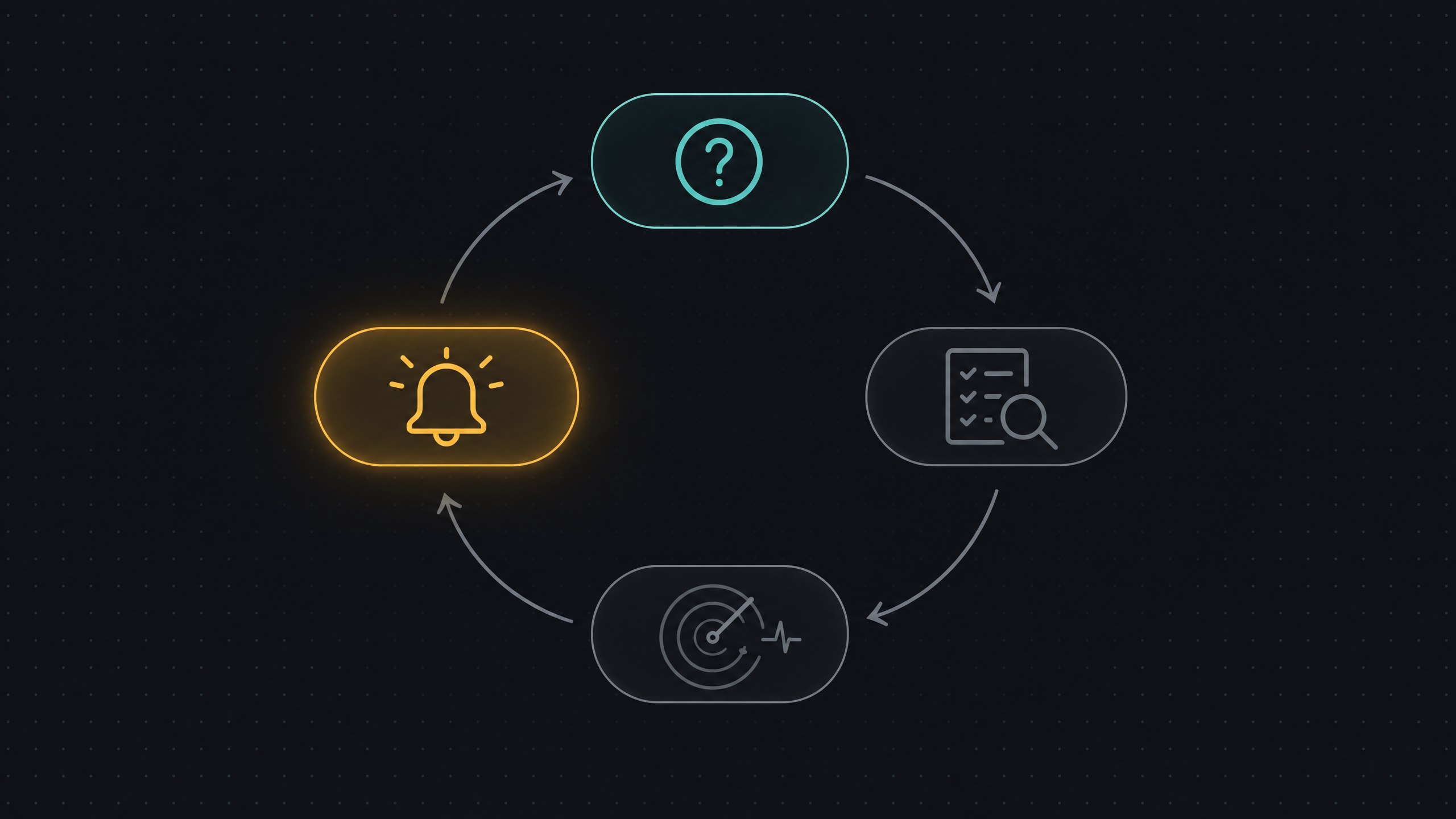
On October 7, 2025, the US Patent Office granted Google LLC patent US12437012B2, "Autonomously providing search results post-facto, including in assistant context" — filed April 29, 2024, inventor Xi Wu. Its status as of this writing is Active, in force until November 18, 2036: this isn't a pending application, it's a granted, live patent. The mechanism is described in four steps:
- The user submits a query — the system needs a specific fact, not a general answer.
- The system searches and ranks resources, then checks whether any is flagged as an "authoritative answer" satisfying its quality criteria.
- If none does, the system stores metadata linking the query to the user, and a monitoring engine periodically rechecks sources for a resource that now qualifies.
- Once a qualifying resource is found, the content is delivered "post-facto" — via push notification, spoken aloud, or folded directly into a separate assistant conversation unrelated to the original query — without requiring the user to resubmit the query.
This isn't just a patent lawyer talking — Google itself confirms it
At Google I/O, Google Search's own head, Liz Reid, said in an interview that the company is actively moving toward exactly this — "Agentic Search." She gave examples of routine tasks people currently have to manually recheck: a new exhibit opening at a museum, a local event schedule, a specific stock price swing. Instead of constant manual monitoring, a user will be able to hand the task to a search agent, which sends a notification itself once the right trigger fires. Telling: the interviewer's own framing of the question — asking how the user experience is "all set to change... after this IO," meaning right after that very conference, not someday. Reid doesn't correct that framing or push it into the future tense — she answers: "this is really the era of agentic search." Present tense. Already here, not coming.
The "until November 18, 2036" date above is the patent's legal protection window, not a release timeline: a patent runs for thirty-odd years by default, regardless of whether the feature ships in a month or in ten years. Going by Reid's own words, 2036 isn't the year to wait for.
What actually changes in the nature of search
Previously, a search session ended the moment results were returned — whether the answer satisfied or not made no difference, the session was closed either way. Now search becomes a background task: the session stays active, continuously matching the original query against new data entering the web, until an exact answer is found. The difference isn't in the interface — it's that a query is no longer a one-time act, but an open, waiting task.
What this means for anyone writing for search
For SEO this creates conditions that didn't exist before. It now makes sense to optimize content for queries that have no instant answer right now — because the moment one exists, the persistent-search system will find and deliver your material on its own, ahead of anyone who writes about it later. Practical consequences:
- Publishing speed becomes a trigger, not just a nice-to-have. The system monitors for updated data appearing — whoever closes the open question first gets delivered straight into an already-waiting session, instead of fighting for a click on a fresh results page.
- Markup that flags a fact as an "authoritative answer" matters more than a page's overall SEO weight. The system looks for a specific field in the knowledge graph, not the page as a whole — structured, unambiguously stated facts get priority.
- It's worth writing content for questions that don't have an answer yet. A page that already describes what will become known, and when, is a candidate to become exactly the "criteria-satisfying" source once the information appears.
Toolkit: from hindsight to forecast
We used to research keywords with KeyCollector, Google's own suggestions, Ahrefs — tools that look backward, at demand that has already happened. Today we cluster those queries into meanings — still retrospective, just one level of abstraction up. But how do you forecast demand for something that hasn't happened yet?
What follows is my hypothesis, not a fact — I'm putting it up for discussion. If search really is becoming persistent and rewards whoever closes an unanswered question first, clustering past queries isn't enough anymore — you need a tool that speculates about future demand. Technically, that's an agent run at a deliberately cranked-up generation temperature, fed Google Trends, trying to guess what users in your niche will be asking a month from now — not pattern-matching the past, but controlled extrapolation.
My bet: tools like this will become expensive and sought-after soon — precisely because what you're paying for isn't the data, it's being early: the exact advantage this whole article is about.
Seriously enough that I'm considering building this tool myself.
This is the same principle behind GEO and AEO generally: what matters isn't being indexed, it's whether a machine — a search agent, a language model, a knowledge-graph monitor — can pull the exact fact it's waiting for off your page. If you want to check how ready your site is for this today, the free audit shows it in a couple of minutes.

0 comments
No comments yet — be the first to share your thoughts.
Sign in to post your comment instantly:
…or comment as a guest — guest comments appear after moderation.